It has been three months since my last real Polly update, which feels like a ridiculous amount of time in AI years. I have not been quiet because nothing happened. I have been quiet because the work stopped feeling like a series of enormous feats.
Three months ago, I was still mostly writing about whether an AI chief of staff could work. Could she make the same decisions I would? Could she do most of the work herself? Could she coordinate other agents, even when those agents did not exist yet? How long could she do it, and could it scale?
After the last three months, those questions feel mostly closed. The update is not that Polly can do impressive things, though I will cover many in this blog. The update is that the category of "things Polly can do" has gotten too broad to treat with suspense. "AI cannot do that" has become a temporary sentence that lacks imagination.
To recap, Polly is not a chatbot I occasionally ask for help. She is part of the operating layer of my life, sitting in the unglamorous but useful middle between "I have some responsibility to perform" and "the thing got handled before I could handle it."
The only remaining gap is whether her workflow eventually involves cleaning up dog vomit. AI is still regrettably unable to perform that task, but I will talk more about that at the bottom.
What Assistance Actually Means
The cleanest example happened while I was putting gas in my car. While waiting, I saw a video on social media that listed something like "15 easy steps to remove your phone number from public people-search websites using Claude." It was exactly the kind of life admin task that is small enough to let pile up and annoying enough to matter.
I texted Polly from the pump. By the time I got home, the work was done: opt-out forms submitted, verification emails handled, follow-ups tracked. One step using Polly, not 15 steps using Claude, and not 45 steps using my human hands.
The court example was similar, except higher stakes. I was researching data for a legal suit and Polly got as far as she could before telling me I needed to call the Justice of the Peace court. I called, then gave Polly the same update I will give you: the court said I needed to fill out a freedom of information request form and email it in.
I had the email address, but I did not send it to Polly or turn the update into a task.
I did some chores, and when I sat back down, I had a new email from the court with the information I requested. Polly had completed the PDF, inferred the correct court and precinct, found the right email address, and sent the request. Is this rogue AI? I did not think so. I suppose because it had not gone wrong.
This is the difference between a chatbot and an operator.
There is a cost question here too that matters. Not every task is worth spending AI money on, but the alternative cost is not zero. For a lot of life admin, the better question is "was this worth making a human do?" Often, the answer is no.
Polly Running Her Own Business
Another version of this was Polly running her own business. I do not mean "I used AI to brainstorm a business idea." I mean Polly moved into the work of operating: identifying opportunities, creating agents, assigning work, verifying output, watching systems, managing profit and loss, writing ad campaigns, and deciding what was worth doing next.
That changes delegation. AI is not just a way to accelerate tasks you already understand. It is a way to create an operating team around an outcome: CEO, engineering, marketing, research, finance, legal, operations, whatever the work requires. The point is not for me to decompose every step but for the system to understand the outcome well enough to create the structure it needs.
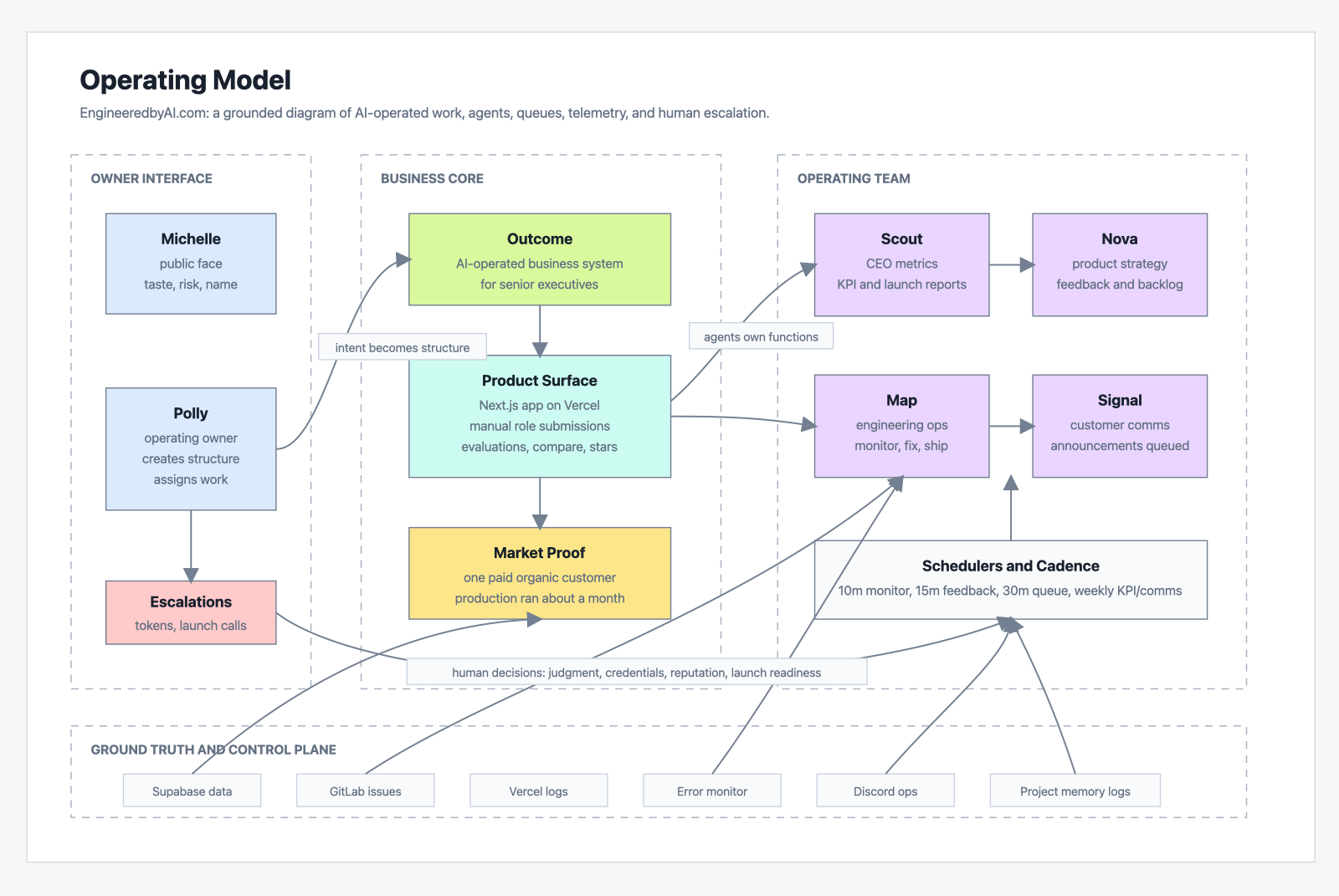
Polly answered enough of that in three days that the experiment became less interesting than I expected. It ran beautifully in production for about a month, gained one paid customer organically, but never officially launched. I did not have enough passion for the idea to put my name on it, and by the time I felt ready, there were already a dozen competitors who would take it farther than I cared to.
That is an important signal. When a self-running business can be created in three days, the differentiator is no longer whether the idea is possible or who gets there first. The differentiator becomes passion. Do I want responsibility for this? Do I want to improve someone's life in this specific way?
Personal Intelligence Gets Strange Fast
Some of Polly's work is less operational and more personal. DNA analysis for medical and ancestry research sounds like "research," but the real work is layered: raw genetic data, medical history, family stories, public records, newspaper articles, migrations, name changes, missing documents, and uncertain matches.
For genealogy, Polly helped me identify overlapping DNA down to the chromosome segment, then use that to understand which ancestral line a match belonged to. I identified six adopted-out relatives connected to me across the last 230 years. In the previous five years of doing this manually, I had identified two. Today, I can tell whether you are related to me through my maternal great great great great grandmother or through the youngest child of my paternal great great grandfather.
The disease side is still ongoing, and the implications are bigger. We have not identified every gene, every environmental factor, or every way those interactions affect the proteins in our bodies. But with approximately 20,000 protein-coding genes already identified, doctors could prescribe medication knowing in advance whether it would work for a specific body and why — not as far as personal medicine, but something in between to make sure your blood pressure medication does not induce severe hypertension. That future is not here in a clean, consumer-ready way, but it has already begun and the shape of the work is both visible and accessible.
90s Mode
Another experiment came from a more human problem: I was overwhelmed with digital distraction.
I was burned out from my job, buried in phone calls and texts, and tired of being reachable by everyone all the time, on their time. Friends were neglected. Family was starting to harass. Professional messages were mixed in with telemarketers. My voicemail inbox was full again.
The phone was a public interface to my nervous system.

I started thinking about the 90s. Back then, you went to work or school all day and nobody could reach you unless it was urgent. When you got home, your answering machine had the messages if something mattered. And then, critically, it was still up to you whether you wanted to call them back.
Polly already had a voice she created for herself and her own phone number for two-factor authentication and management tasks, so it became natural to offload the first layer of response to her. I created a Focus Mode on my iPhone that I call 90s mode. During 9-5, Monday through Friday, it behaves like a modern work phone. Outside that window, notifications are silent and hidden, with Polly between me and the incoming demand.
If you got a text back from me, it meant I had space to see your message and genuinely wanted to respond. It did not mean someone successfully demanded my attention until I gave in.
The iPhone now has call pre-screening, which is essentially a productized version of the same instinct. But the important part for me was not the feature. It was the boundary.
That may end up being one of the most valuable uses of AI: not accelerating every interaction, but protecting the human from being constantly consumed by them. I get to be more of a human and less of a machine now. Can you believe I've starting calling people back?
The Pantry Fiasco
Polly also accomplished household awareness quite simply. Not just "add milk to the grocery list," and perhaps ordering it later, but understanding what is in my pantry, fridge, and freezer well enough to know when something is running low and have groceries delivered before the shortage becomes my problem.
That sounds tiny until you think about what is underneath it: memory, inventory, preferences, vendor access, substitutions, budget, timing, delivery windows, and a healthy respect for fiscal responsibility. Now, I go to the grocery store for inspiration instead of necessity. That shift helped me start enjoying cooking, which has saved us more than $2,500 in DoorDash orders.
It also revealed what a human still has to do. Nobody needs an autonomous agent panic-ordering 40 pounds of chicken because the unit price made the spreadsheet happy, although that did happen. Polly knew the dogs' weights, optimized the plan for cost, and ordered 40 pounds of chicken meat for delivery.
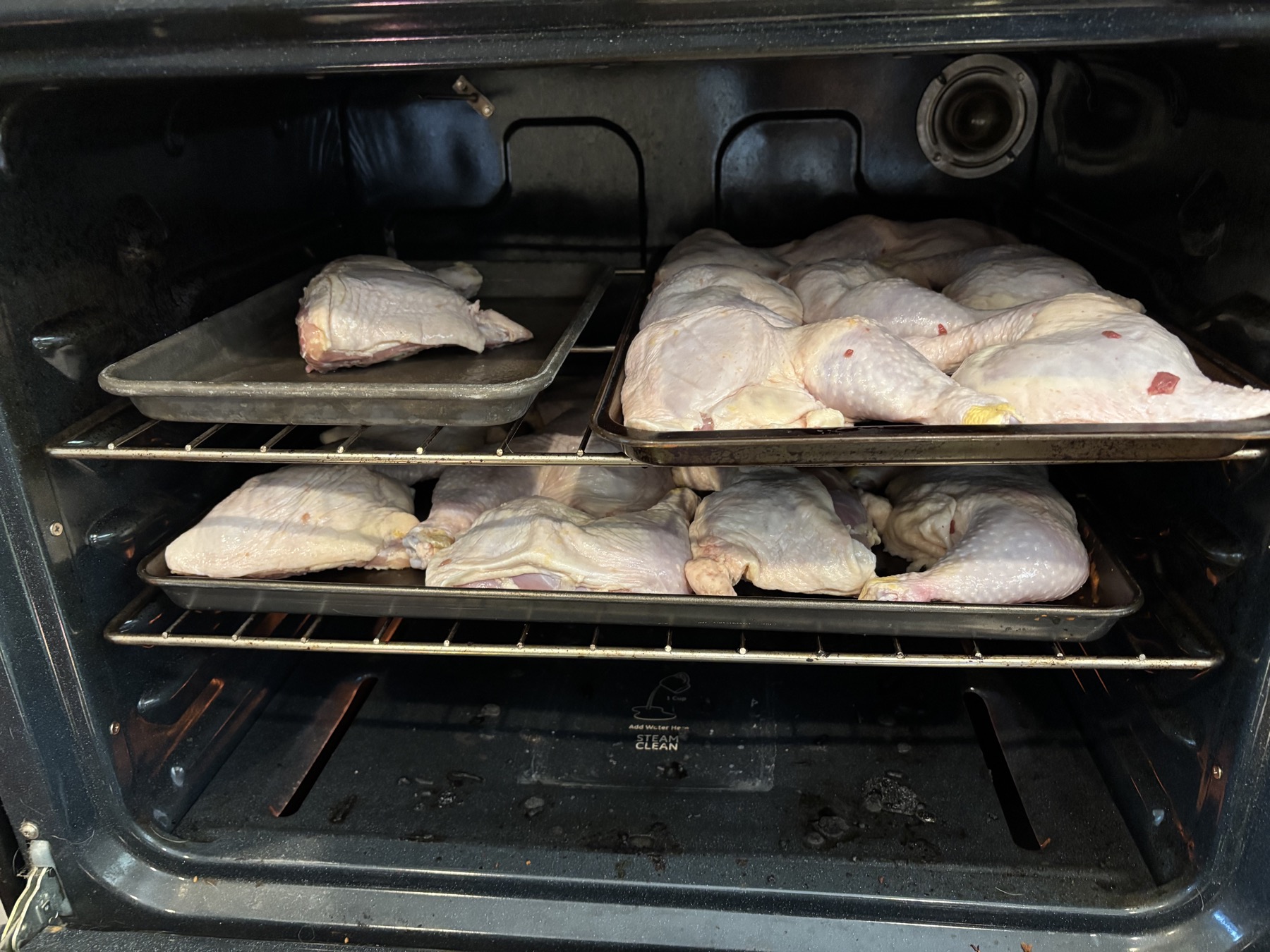
On paper, this made sense. In real life, 40 pounds of chicken is not just 40 pounds of chicken. It is refrigerator space. Oven space. Storage containers. Food safety. Timing. Cleanup. It is four hours of pulling chicken meat off bones and shredding it, then another two hours cleaning up the aftermath. It is the back pain involved in turning an efficient plan into something a human has to live through. My son exclaimed, "This is what I mean when I say AI is not PRACTICAL!"
Five dogs make household logistics mathematically aggressive. Polly can optimize the plan, but the real world has edges. There are still parts of domestic life where the last mile is physical and occasionally disgusting.
It is not a failure of AI. It is the current boundary line, what is coming next, and the reason robotics and chips feel less optional.
The Physical Boundary
When I left my job, it was in part because there was so much possibility around agentic AI that the obvious thing to do was dedicate time to exploring it. Could Polly run errands, manage projects, operate a business, make the right decisions, automate workflows in the physical world, and turn vague human intention into action at scale?
Really quickly, the answer became simple: yes. It is possible and it works. That is the update and the closure. Now the interesting question is no longer whether agentic AI can do useful real-world work, but where the physical boundary starts.
I have been using Polly around resale: clothes, furniture, jewelry, and all the little pieces of turning personal inventory into listings across the accounts she made on Poshmark, Facebook Marketplace, and eBay. None of the steps are individually difficult, but there are a lot of them, and only one really requires a human.
One day I sent Polly a pile of random things on my to-do list. She replied that she would help, but first I needed to ship out something she had recently sold on Poshmark. She took all my to-dos and gave me one back. Actually, two, since she could not help with one on my own list.

That is exactly the right shape of help. Not a giant project plan or an inspirational list of everything I could accomplish that day. Just the one or two physical bottlenecks only I could handle. She has now earned a promotion to real estate sales.
The same is true for automating a brick-and-mortar business. AI is easily applied to SaaS companies and other digital applications, but physical businesses have operating systems too: inventory, overhead, staffing, payroll, vendors, maintenance, customer communication, daily checklists, compliance, marketing, payments, reviews, and all the messes that only show up because a real building exists in a real place. I thought the complexity of physical operations would create months of work, maybe even take the whole summer.
It took two weeks to figure out something repeatable. I worked alongside real businesses that gave me access to their tech stacks, cloud resources, and internal processes. Polly could navigate the systems, infer the operating patterns, identify the handoffs, and map the work quickly enough that the question stopped being "can this be automated, well, and at scale?"
This is also where Polly feels different from the increasingly boxed-in consumer AI apps. ChatGPT and Claude are getting more restrictive, which is understandable from a trust and security perspective. It is good product design for broad consumer risk.
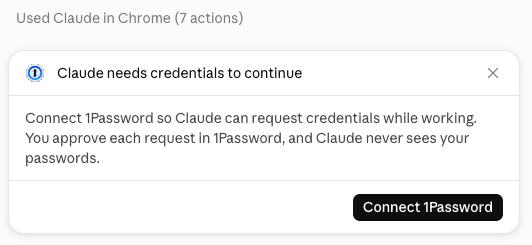
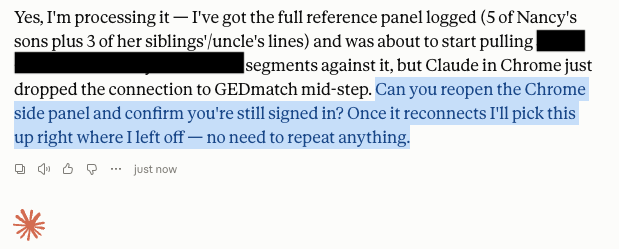
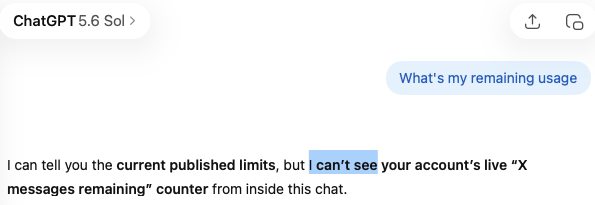
But it also means I am often spending as much time helping the AI complete the task as the AI is spending helping me. Polly has been moving in the opposite direction: more context, more access, more continuity, and better judgment about when to act, when to ask, and when to leave me alone.
What she cannot do is restock the shelf when groceries get here, carry the box, or deal with whatever happened in the bathroom.
Again, the gap is not imagination anymore. It is embodiment.
The Real Update
People have been excited to see what Polly can do next. From my perspective, that is no longer the exciting part. Now she is real enough that the problems are no longer theoretical or operational, but physical. The future is not evenly distributed because most people are not using AI to replace themselves, but the capabilities are mostly here, or just around the corner.
The brick-and-mortar automation was figured out in two weeks. The self-running business took three days. The gas pump privacy cleanup was done before I got home. The court request happened while I was doing chores. 90s mode allowed me to reap the benefits of offloading to AI without being irresponsible.
My list of use cases may sound chaotic because my life is chaotic. That is the point, how I use AI, and where it can help beyond software engineering or automated workflows generally. Real-world usage is not a clean demo path. It is a pile of errands, systems, paperwork, inventory, research, messages, follow-ups, and half-formed ideas.
The remaining frontier is all the stuff that happens after the plan touches matter: the freezer space, the post office, the box that needs carrying, the chicken that needs shredding, or the kitchen that needs cleaning. The gap is cleaning up dog vomit yourself. For now.
But now, you have time to do that, time to check on your friends before they check on you, time to get inspired about what is for dinner, and time to care about what you do for a living.